
Use the period calculator when you want an estimated next period date from the first day of your last period and your average cycle length. Use the ovulation calculator for a separate calendar estimate, and use the cycle guide when you need to check how cycle length is counted. These pages share the same browser-first approach, but they should not be treated as a diagnosis, a pregnancy test, or contraception.
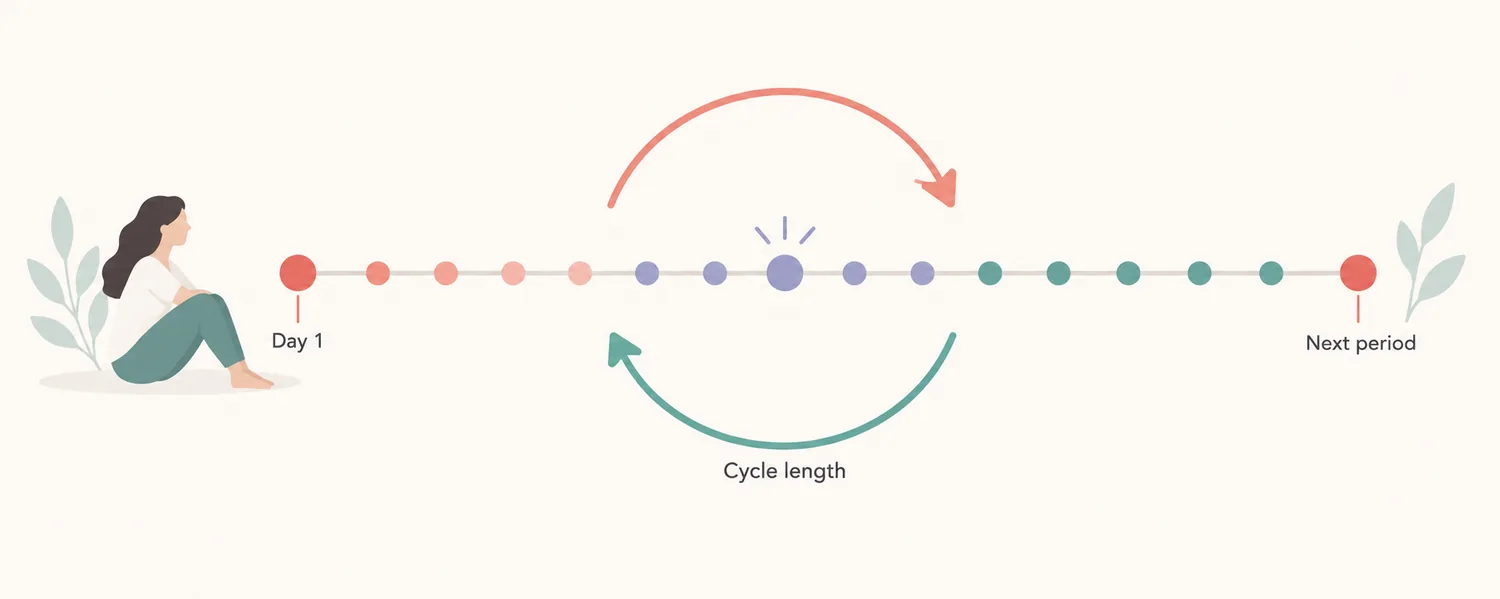
Choose the period calculator tool for your question
Start with the task you are trying to complete, not with the most familiar keyword. A period date estimate, an ovulation estimate, and an explanation of cycle length use related language but produce different outputs. The cards below show the intended boundary for each available page.
period calculator
Estimate your next period
Enter the first day of your last period and an average cycle length to see an estimated next start, an optional period-end date, six upcoming cycle dates, and a clearly labeled calendar-based fertile-window estimate. An irregular-cycle option can show a possible range from the shortest and longest usual cycles you enter.
Best for: a quick date estimate and a simple planning calendar
Open the period calculatorovulation calculator
Estimate ovulation timing
Use a last-period date, cycle length, and optional luteal-phase assumption when your question is about an estimated ovulation day or fertile window. The output explains the calendar method and keeps the estimate separate from a test that measures hormone changes.
Best for: understanding the assumptions behind a fertile-window estimate
Open the ovulation calculatorperiod cycle guide
Check how cycle length is counted
Read the cycle guide when you are unsure whether to count bleeding days, how to find an average, or how to interpret a range. It explains why the first day of one period to the first day of the next is the relevant interval.
Best for: learning the formula before entering numbers
Read the cycle guideprivacy and limits
Review data and health boundaries
The calculator is designed to do the basic date arithmetic in your browser without an account. The privacy policy explains other site technologies, while the on-page limitations explain why a calendar forecast cannot diagnose a late period or confirm pregnancy.
Best for: checking what an estimate can and cannot tell you
Read the Privacy PolicyStart with the task, input, and output
The phrase period calculator covers several related searches. Someone planning a trip may only need the next expected period. Someone comparing cycle history may need a cycle-length explanation. Someone asking about fertile days is asking a different question and needs a different set of assumptions. Choosing a page by its output reduces the chance that a familiar label will hide an important limitation.
Before you type a date, name the result you actually need. A period calculator returns a future period-start estimate. An ovulation calculator works backward from an estimated next period and a luteal-phase assumption. A cycle guide explains the measurement itself. A future irregular-period tool may show a range, but a range still describes the values entered rather than the cause of variation.
| Your question | Useful input | Main output |
|---|---|---|
| When might my next period start? | Last-period start and average cycle length | Estimated next period date |
| When might ovulation be near? | Last-period start, cycle length, luteal phase | Estimated ovulation and fertile-window dates |
| How do I count a cycle? | Two successive period start dates | A measured cycle length and an average |
| Why does one date feel too exact? | Shortest and longest usual cycles | A range tied to those inputs |
Enter the first day of the right period
The anchor date is the first day of normal menstrual bleeding, used consistently from one cycle to the next. It is not the final day of bleeding, the day symptoms began, or an approximate date copied from a previous prediction. A one-day input error moves every later result by one day, so the date deserves more care than the button label suggests.
Cycle length is measured from the first day of one period to the first day of the next. Period length is a separate measurement that counts bleeding days. If bleeding lasts five days, the cycle is not five days. Keeping the two numbers separate prevents a common error in both a menstrual cycle calculator and a paper calendar.
next period estimate = last-period start date + average cycle length- Choose the first day of normal bleeding using the same rule each time.
- Use the average number of days between period starts, not the number of bleeding days.
- Save the actual next start date so the next estimate uses newer information.
- Treat a result based on an uncertain date as an approximate planning note.
A calculator improves arithmetic and makes assumptions visible; it does not observe the body or verify an input date.
Choose an average that represents your recent cycles
Twenty-eight days is a convenient example, not a requirement. If you have several recorded cycles, add their lengths and divide by the number of intervals. For example, 27, 29, and 30 days total 86 days; divided by three, the average is about 28.7 days. A whole-day calculator may use 29, but remembering the rounding makes it easier to explain why a result differs by a day.
Do not erase an unusual interval without checking the dates first. A late entry, a missed start, or a change in how you define day one may explain the difference. If the interval is real, it is part of the record. The best input is not the number that produces the most reassuring prediction; it is the number that describes the pattern you are trying to plan around.
| Recorded interval | Length | Why it matters |
|---|---|---|
| Cycle 1 | 27 days | Include when both start dates are known |
| Cycle 2 | 29 days | Shows the middle of the recent pattern |
| Cycle 3 | 30 days | Keeps a real longer interval visible |
| Average | About 28.7 days | A whole-day field may use 29 |
Read the result as a planning estimate
The main result is a projected first day, not a guaranteed appointment with the calendar. The six-cycle list is useful for seeing how an average repeats, but each later row inherits the same assumption. If your next actual period arrives earlier or later, the later rows should be recalculated from that new start date.
An ovulation date or fertile window displayed beside a period estimate is also calendar arithmetic. It may help explain the relationship between cycle phases, but it cannot confirm that ovulation occurred. Timing can move with normal variation, illness, stress, sleep changes, medication, hormonal changes, and other factors that a simple form does not measure.
- Look for the word estimated or approximate beside calendar outputs.
- Check whether the date came from an average or a shortest-to-longest range.
- Replace the forecast with the actual start date when it arrives.
- Do not use estimated fertile days as a contraception method.
Keep privacy and health boundaries in view
For a one-time calculation, a browser-first tool is often enough. The basic date arithmetic on this site does not require an account, name, email address, or health profile. That local calculation promise describes the calculator flow; it does not replace the Privacy Policy, which explains analytics, advertising, cookies, technical logs, and support messages used by the site.
A calendar tool cannot tell you why a period is late, confirm a pregnancy, diagnose infertility, identify a hormonal condition, or decide whether a symptom is safe to ignore. If you have severe pain, unusually heavy bleeding, repeated major changes, or a concern about possible pregnancy, seek advice from a qualified healthcare professional. Use an appropriate pregnancy test when that is the question.
This site provides general education and calendar planning. It is not a medical service and should not be used as contraception.
Further reading
For medically reviewed background on menstrual cycles, use a public health source or speak with a qualified clinician. The pages in this directory explain calendar arithmetic and its limits; they are not clinical assessments.
- Office on Women's Health: Your menstrual cycleA U.S. Department of Health and Human Services resource describing menstrual-cycle basics and common questions.
- Cleveland Clinic: Menstrual cycleA patient education article that provides additional medical context for cycle timing.
Period calculator tools FAQ
Which period calculator should I use?
Use the period calculator for a next-period date, the ovulation calculator for a calendar-based ovulation estimate, and the cycle guide when you need to check how the interval is counted.
Are the period calculator and ovulation calculator the same?
No. They share a last-period date and cycle-length anchor, but the ovulation page adds a luteal-phase assumption and produces a different estimate. Neither page confirms what happened in the body.
What date should I enter as the start of my period?
Use the first day of normal menstrual bleeding, using the same definition each cycle. Do not substitute the last bleeding day or the day an earlier forecast was displayed.
Is a 28-day cycle required?
No. Twenty-eight days is a common example. Use an average from recent recorded cycles when possible, and keep the result labeled as an estimate.
Can a period calculator explain a late period?
No. It can compare an actual date with a calendar estimate, but it cannot identify the reason for a delay or diagnose pregnancy or another condition.
Can I use estimated fertile days to prevent pregnancy?
No. Calendar predictions cannot reliably identify safe days or confirm ovulation. Use an appropriate contraceptive method and seek qualified medical advice for pregnancy-prevention questions.
Why would I use a range instead of one date?
A range can show how your chosen shortest and longest cycle lengths move the calendar. It is often more transparent when recent cycles vary, but it is not a guarantee or a medical confidence interval.
Is the calculation private?
The basic date calculation runs in the browser without requiring an account. The Privacy Policy explains the site's other technologies, including analytics, advertising, cookies, and technical data.